In the realm of electrical systems, the question of whether an air switch circuit breaker can be used in a DC electrical system is a topic that warrants in - depth exploration. As a seasoned supplier of air switch circuit breakers, I've encountered numerous inquiries from customers about the compatibility and performance of our products in DC applications. In this blog, I'll delve into the technical aspects, advantages, limitations, and practical considerations of using air switch circuit breakers in DC electrical systems.
Technical Differences between AC and DC Electrical Systems
Before discussing the applicability of air switch circuit breakers in DC systems, it's essential to understand the fundamental differences between AC (alternating current) and DC (direct current) electrical systems.
AC is characterized by its continuously changing direction and magnitude, typically following a sinusoidal waveform. The frequency of the AC power supply in most countries is either 50Hz or 60Hz. On the other hand, DC has a constant direction and magnitude, flowing steadily in one direction. These differences have significant implications for the operation of electrical components, including circuit breakers.
How Air Switch Circuit Breakers Work
Air switch circuit breakers are designed to protect electrical circuits from over - current, short - circuit, and other electrical faults. They operate based on the principle of thermal and magnetic tripping.
The thermal element in an air switch circuit breaker responds to long - term over - current conditions. When the current exceeds the rated value for an extended period, the heat generated by the current causes a bimetallic strip to bend, which in turn trips the breaker. The magnetic element, on the other hand, is designed to respond to short - circuit currents. A large, instantaneous current creates a strong magnetic field that activates a solenoid, causing the breaker to trip.

Using Air Switch Circuit Breakers in DC Systems
Advantages
- Fault Protection: Air switch circuit breakers can provide effective over - current and short - circuit protection in DC systems, similar to their function in AC systems. In a DC electrical system, over - current can lead to overheating of wires and components, potentially causing fires or equipment damage. An air switch circuit breaker can quickly interrupt the circuit when an over - current condition is detected, preventing such hazards.
- Cost - Effective: Compared to some specialized DC circuit breakers, air switch circuit breakers are generally more cost - effective. For small - to - medium - sized DC systems, using air switch circuit breakers can be a budget - friendly option without sacrificing too much on performance.
Limitations
- Arc Extinction: One of the major challenges of using air switch circuit breakers in DC systems is arc extinction. In an AC system, the current naturally crosses zero twice in each cycle. This zero - crossing point helps in extinguishing the arc that forms when the breaker contacts separate. In a DC system, however, there is no natural zero - crossing, which means the arc can be more difficult to extinguish. If the arc persists, it can cause excessive wear on the breaker contacts, reduce the breaker's lifespan, and even lead to re - ignition of the circuit.
- Magnetic Field Interaction: The magnetic field generated by the DC current can interact with the magnetic tripping mechanism of the air switch circuit breaker. This interaction may cause the breaker to trip at incorrect current levels or fail to trip when required.
Practical Considerations
Voltage and Current Ratings
When considering using an air switch circuit breaker in a DC system, it's crucial to ensure that the breaker's voltage and current ratings are suitable for the specific application. DC systems can have a wide range of voltage levels, from low - voltage systems (such as 12V or 24V in automotive applications) to high - voltage systems (such as 400V or higher in some industrial settings). The breaker must be able to handle the maximum voltage and current that the DC system can produce.
Arc Extinguishing Techniques
To overcome the arc extinction challenge, some air switch circuit breakers designed for DC applications incorporate special arc - extinguishing techniques. For example, they may use arc chutes or magnetic blow - out coils to stretch and cool the arc, making it easier to extinguish.

System Configuration
The configuration of the DC system also plays a role in the performance of the air switch circuit breaker. For instance, in a series - connected DC circuit, the breaker may need to interrupt a higher current compared to a parallel - connected circuit. Understanding the system configuration helps in selecting the appropriate breaker.

Related Products for DC Electrical Systems
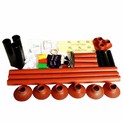
In addition to air switch circuit breakers, there are other products that can be used in DC electrical systems to ensure proper functioning and safety. For example, the Wire Square Tube Cable Terminal Set is an essential component for connecting cables in a DC system. It provides a secure and reliable connection, reducing the risk of electrical faults.
The Heat Shrink Termination Heat Shrinkable Joints are used to insulate and protect cable joints in DC systems. They can prevent moisture and contaminants from entering the joint, which can cause short - circuits or other electrical problems.

The Heat Shrinkable End Cap for Cable Termination is another useful product. It provides a protective covering for the end of a cable, preventing damage and ensuring the long - term reliability of the cable in a DC system.
Conclusion
In summary, while air switch circuit breakers can be used in DC electrical systems, there are several factors to consider. They offer advantages such as cost - effectiveness and basic fault protection, but they also face limitations, mainly related to arc extinction and magnetic field interaction. By carefully selecting the appropriate breaker with suitable ratings and considering the system configuration, air switch circuit breakers can be a viable option for many DC applications.
If you are interested in purchasing air switch circuit breakers or any of the related products mentioned above for your DC electrical system, we invite you to contact us for a detailed discussion. Our team of experts is ready to assist you in finding the most suitable solutions for your specific needs.
References
- IEEE Standard for Low - Voltage DC Power Systems in Commercial Buildings (IEEE 1662).
- Electrical Safety Handbook, Third Edition by NFPA.
- "Analysis of Arc Extinction in DC Circuit Breakers" by Journal of Electrical Engineering.