


Hey there! As a rubber cable supplier, I've seen firsthand how crucial cable flexibility is in various applications. In this blog, I'll break down how the flexibility of rubber cables stacks up against other types of cables.
What Makes Flexibility So Important?
Before we dive into the comparison, let's talk about why flexibility matters. In many industries, cables need to bend, twist, and move without breaking or losing their functionality. Think about robotics, where cables are constantly in motion. Or in portable equipment, like power tools, where cables need to be easily maneuvered. A flexible cable can reduce stress on the conductor and insulation, extending the cable's lifespan and preventing costly downtime.
Rubber Cables: The Flexibility Champions
Rubber cables are known for their outstanding flexibility. The secret lies in the rubber material itself. Natural or synthetic rubber compounds used in cable insulation and sheathing are inherently elastic. This elasticity allows the cable to bend and flex repeatedly without cracking or losing its electrical properties.

One of our popular products, the Multi Core Copper Submersible Rubber Cable, is a great example. It's designed for submersible applications, where the cable needs to be flexible enough to be installed in tight spaces and withstand the movement of the equipment. The rubber sheathing provides excellent resistance to abrasion, water, and chemicals, making it suitable for harsh environments.
Another advantage of rubber cables is their ability to maintain flexibility in extreme temperatures. Unlike some other cable materials, rubber doesn't become brittle in cold weather or soft and sticky in hot conditions. This makes rubber cables ideal for outdoor and industrial applications where temperature variations are common.
Comparing Rubber Cables to PVC Cables
PVC (polyvinyl chloride) cables are widely used due to their low cost and good electrical insulation properties. However, when it comes to flexibility, rubber cables have the edge.
PVC cables are generally stiffer than rubber cables, especially in cold temperatures. The PVC material tends to harden when the temperature drops, reducing its flexibility and making it more prone to cracking. This can be a significant drawback in applications where the cable needs to be bent or moved in cold environments.
Our Copper Core PVC Sheathed Flexible Braid Shielding Wires offer some flexibility, but they can't match the extreme flexibility of rubber cables. PVC is a more rigid plastic, and while it can be formulated to be more flexible, it still doesn't have the same natural elasticity as rubber.
Comparing Rubber Cables to XLPE Cables
XLPE (cross-linked polyethylene) cables are known for their high electrical performance and resistance to heat and moisture. However, they are not as flexible as rubber cables.
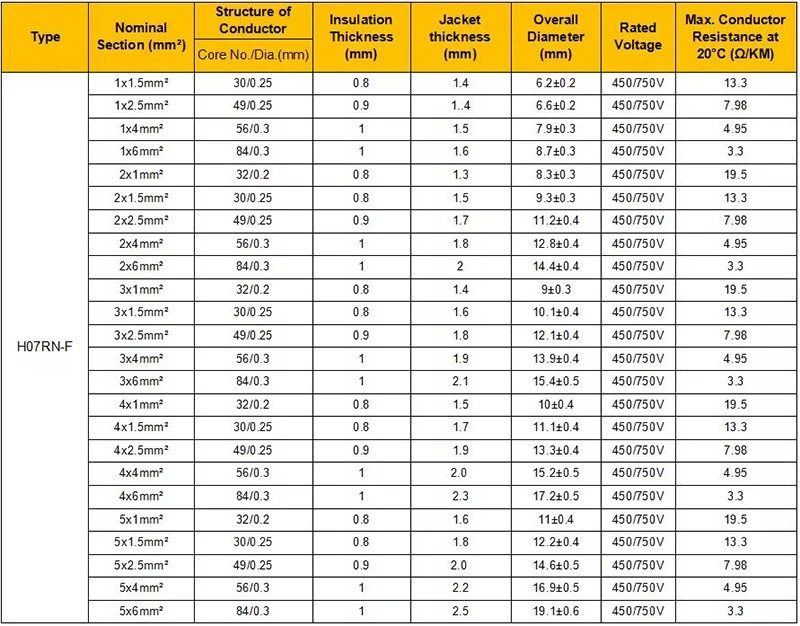
XLPE is a thermosetting plastic, which means it has a more rigid molecular structure compared to rubber. This makes XLPE cables less flexible, especially when it comes to tight bending radii. In applications where the cable needs to be bent sharply or frequently, rubber cables are a better choice.
Our Submarine XLPE PVC Or Rubber Coated 400mm Copper Cable offers a combination of the benefits of XLPE and rubber. The XLPE insulation provides excellent electrical performance, while the rubber coating adds flexibility and protection. However, if flexibility is the primary concern, a pure rubber cable may be a better option.
Applications Where Rubber Cables Shine
Rubber cables are the go-to choice in many applications where flexibility is essential. Here are some examples:
Robotics and Automation
In robotics and automation, cables need to be able to move freely with the robot's joints and arms. Rubber cables can withstand the constant bending and twisting without breaking, ensuring reliable operation.
Portable Equipment
Portable power tools, generators, and other equipment require flexible cables that can be easily moved and adjusted. Rubber cables are lightweight and flexible, making them ideal for these applications.
Marine and Submersible Applications
In marine and submersible applications, cables need to be resistant to water, salt, and abrasion. Rubber cables have excellent resistance to these elements and can maintain their flexibility even when submerged.
Outdoor and Harsh Environments
Outdoor and harsh environments, such as construction sites and mines, expose cables to extreme temperatures, moisture, and mechanical stress. Rubber cables can withstand these conditions and continue to perform reliably.
Why Choose Our Rubber Cables?
As a rubber cable supplier, we take pride in offering high-quality products that meet the needs of our customers. Our rubber cables are manufactured using the latest technology and the highest quality materials, ensuring excellent flexibility, durability, and electrical performance.

We offer a wide range of rubber cables, including multi-core cables, single-core cables, and specialty cables for specific applications. Our team of experts can help you choose the right cable for your needs and provide technical support and advice.
Let's Talk!
If you're in the market for flexible cables, I'd love to hear from you. Whether you need a standard cable or a custom solution, we can help. Contact us today to discuss your requirements and get a quote. Let's work together to find the perfect cable for your application.
References
- Electrical Cable Handbook, Third Edition, by John W. McDonald
- Handbook of Polymer Science and Technology, Volume 2, by Joel R. Fried


