


Vibration is a common phenomenon in various industrial and electrical environments. For power cable jointing accessories, understanding their vibration - resistance is crucial as it directly impacts the reliability and safety of the entire power system. As a supplier of power cable jointing accessories, I'd like to delve into this topic in detail.
The Significance of Vibration - Resistance in Power Cable Jointing Accessories
Power cable jointing accessories are used to connect different sections of power cables, ensuring the continuous transmission of electrical power. These joints are often located in areas where vibration occurs, such as near industrial machinery, on transportation systems, or in buildings with mechanical equipment running. Vibration can cause several problems if the jointing accessories do not have adequate vibration - resistance.
One of the primary issues is the loosening of connections. Over time, continuous vibration can gradually loosen the bolts, nuts, or other fastening components in the joint. This loosening leads to increased contact resistance at the joint, which in turn generates more heat. Excessive heat can damage the insulation materials of the cable and the jointing accessories, increasing the risk of electrical faults such as short - circuits and power outages.
Another problem is the mechanical stress on the insulation materials. Vibration can cause the insulation to crack or degrade over time. The insulation is essential for preventing electrical leakage and ensuring the safe operation of the power cable. Once the insulation is damaged, it can compromise the safety of the entire power system and pose a significant threat to personnel and equipment.
Factors Affecting the Vibration - Resistance of Power Cable Jointing Accessories
Material Selection
The materials used in power cable jointing accessories play a vital role in determining their vibration - resistance. For example, high - quality metals with good mechanical properties, such as copper and aluminum alloys, are often used for conductors and terminal connectors. These metals have high strength and toughness, which can withstand the mechanical stress caused by vibration.
Insulation materials also need to be carefully selected. Silicone rubber is a popular choice for cable joint insulation due to its excellent flexibility, high temperature resistance, and good resistance to vibration - induced cracking. It can absorb some of the vibration energy and prevent the propagation of cracks.
Design and Structure
The design and structure of the jointing accessories are equally important. A well - designed joint should have a stable and rigid structure that can resist the forces generated by vibration. For instance, some jointing accessories are designed with multiple layers of insulation and reinforcement structures to enhance their mechanical strength.
The shape of the connectors also matters. Connectors with a proper fit and locking mechanism can ensure a tight connection between the cable and the jointing accessory, reducing the risk of loosening due to vibration. Some connectors are designed with anti - loosening features, such as self - locking nuts or spring - loaded contacts.
Installation Quality
Even the best - designed and highest - quality jointing accessories may not perform well if they are not installed correctly. Proper installation techniques are essential for ensuring the vibration - resistance of the joints. During installation, all connections should be tightened to the specified torque values. The insulation should be installed evenly and without any gaps or wrinkles.
Additionally, the cable should be properly supported and routed to minimize the impact of vibration. For example, using cable trays or clamps to secure the cable can reduce the movement of the cable caused by vibration and protect the jointing accessories.
Testing the Vibration - Resistance of Power Cable Jointing Accessories
To ensure the quality and reliability of power cable jointing accessories, various testing methods are used to evaluate their vibration - resistance.

Vibration Testing
Vibration testing is a common method used to simulate the real - world vibration environment. In this test, the jointing accessories are subjected to a specific frequency and amplitude of vibration for a certain period. During the test, the electrical and mechanical properties of the joint are continuously monitored.
For example, the contact resistance of the joint is measured before, during, and after the vibration test. An increase in contact resistance may indicate that the connection has loosened due to vibration. The insulation resistance is also measured to check for any damage to the insulation caused by vibration.
Impact Testing
Impact testing is another important test method. It is used to evaluate the ability of the jointing accessories to withstand sudden impacts, which are often associated with vibration in some industrial environments. In this test, a certain amount of impact energy is applied to the jointing accessories, and the damage to the joint is evaluated.
Our Company's Approach to Ensuring Vibration - Resistance
As a supplier of power cable jointing accessories, we take several measures to ensure the high vibration - resistance of our products.
First, we carefully select the materials for our products. We source high - quality metals and insulation materials from reliable suppliers. Our copper conductors are made from high - purity copper, which has excellent electrical and mechanical properties. Our silicone rubber insulation is formulated to have high flexibility and resistance to cracking.
Second, we have a team of experienced engineers who design our jointing accessories with vibration - resistance in mind. Our products are designed with advanced locking mechanisms and reinforcement structures to ensure a stable and tight connection. We also conduct extensive computer - aided design (CAD) and finite element analysis (FEA) to optimize the design of our products and ensure their mechanical strength.
Third, we have a strict quality control system in place. All our products undergo rigorous testing before they are shipped to customers. In addition to the standard vibration and impact testing, we also conduct environmental testing, such as temperature and humidity testing, to ensure that our products can perform well in different operating conditions.
Related Products and Their Role in the Power System
In addition to power cable jointing accessories, we also offer a range of related products that are important for the overall performance and safety of the power system. For example, Air Switch Circuit Breaker is an essential component for protecting the power system from over - current and short - circuit faults. It can automatically cut off the power supply when a fault occurs, preventing damage to the equipment and ensuring the safety of the personnel.
Wall Switch and Electrical Accessories are used for controlling the power supply in buildings. They are designed to be easy to use and reliable, and they also need to have good vibration - resistance to ensure their long - term performance.
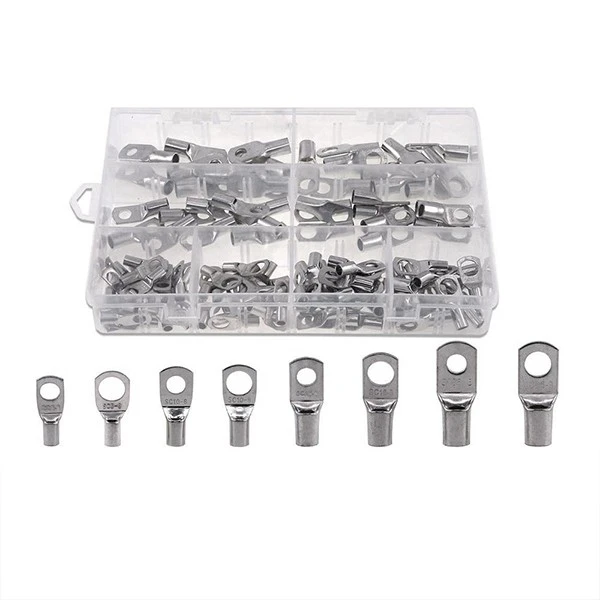
Battery Cable Lug Connector Terminal is used for connecting batteries to the power system. It needs to have a stable connection and good electrical conductivity to ensure the efficient operation of the battery.
Conclusion
The vibration - resistance of power cable jointing accessories is a critical factor that affects the reliability and safety of the power system. By understanding the factors that affect vibration - resistance, such as material selection, design, and installation quality, and by using proper testing methods, we can ensure the high quality of our products.
As a supplier of power cable jointing accessories, we are committed to providing our customers with products that have excellent vibration - resistance. Our strict quality control system and continuous research and development efforts ensure that our products can meet the highest standards in the industry.
If you are in need of high - quality power cable jointing accessories or related products, we invite you to contact us for procurement and further discussions. We are confident that our products and services will meet your requirements and help you build a reliable and safe power system.
References
- Grobler, E. J., & van Wyk, J. D. (2015). Electrical Power Cable Engineering. CRC Press.
- Neher, J. H., & McGrath, M. H. (1957). Calculation of temperature rise and load capability of cable systems. AIEE Transactions, 76(3), 752 - 772.
- International Electrotechnical Commission. (2019). IEC 60502 - 1:2019 - Power cables with extruded insulation and their accessories for rated voltages from 1 kV (Um = 1.2 kV) up to 30 kV (Um = 36 kV) - Part 1: Cables for rated voltages from 1 kV (Um = 1.2 kV) up to 30 kV (Um = 36 kV).


