


Hey there! As a supplier of flame - retardant flexible core cables, I often get asked about the weight per unit length of these cables. It's a super important question, especially for those in construction, electrical engineering, or any field where cable installation is a part of the job. Knowing the weight per unit length helps in planning, transportation, and installation, so let's dive right in and figure this out.
First off, what exactly is a flame - retardant flexible core cable? Well, it's a type of cable designed to resist catching fire and spreading flames. This is crucial in areas where fire safety is a top concern, like in buildings, industrial plants, and even some vehicles. The flexible core makes it easy to bend and install in tight spaces, which is a huge plus.
The weight of a flame - retardant flexible core cable per unit length can vary quite a bit. There are several factors that influence this weight, and we'll go through each one.
1. Conductor Material
The conductor is the part of the cable that carries the electrical current. The most common materials for conductors are copper and aluminum. Copper is a great conductor of electricity, and it's also relatively heavy. Aluminum, on the other hand, is lighter but not as good a conductor as copper.
Let's say you're looking at two cables with the same size and insulation, but one has a copper conductor and the other an aluminum one. The copper - conductor cable will be heavier. For example, a standard 1 - square - millimeter copper conductor might weigh around 8.9 grams per meter, while an aluminum conductor of the same size would weigh about 2.7 grams per meter. This difference in weight can add up, especially when you're dealing with long lengths of cable.
2. Conductor Size
The size of the conductor, usually measured in square millimeters (mm²), also plays a big role in the cable's weight. A larger conductor can carry more current, but it also means more material, and thus more weight.
For instance, a 2.5 - mm² copper conductor will be heavier than a 1 - mm² copper conductor. As the conductor size increases, the weight per unit length goes up proportionally. If you're working on a project where weight is a concern, you might want to choose the smallest conductor size that can safely carry the required current.
3. Insulation Material
The insulation around the conductor is there to prevent electrical leakage and protect the conductor from damage. Different insulation materials have different weights.
Common insulation materials for flame - retardant flexible core cables include PVC (Polyvinyl Chloride) and XLPE (Cross - Linked Polyethylene). PVC is a relatively heavy insulation material, while XLPE is lighter. A cable with PVC insulation will generally be heavier than one with XLPE insulation, all other things being equal.
4. Number of Cores
Flame - retardant flexible core cables can have different numbers of cores. A single - core cable has just one conductor, while a multi - core cable has two or more. Obviously, a multi - core cable will be heavier than a single - core cable of the same conductor size and insulation material because there's more conductor material inside.
For example, a 3 - core cable will weigh about three times as much as a single - core cable of the same conductor size and insulation. If you need to carry multiple electrical circuits, a multi - core cable is a convenient option, but you'll have to account for the extra weight.
5. Sheath Material
The sheath is the outer layer of the cable that protects it from mechanical damage, moisture, and other environmental factors. Just like the insulation, different sheath materials have different weights.
PVC sheaths are common and are relatively heavy. There are also low - smoke halogen - free (LSZH) sheaths, which are lighter and have the added benefit of producing less smoke and toxic gases in case of a fire. You can check out our Low Smoke Halogen Free Multicore XLPE Cable for more information on cables with LSZH sheaths.
Now, let's talk about how to calculate the weight per unit length of a flame - retardant flexible core cable. Unfortunately, there's no one - size - fits - all formula because of the many variables involved. However, cable manufacturers usually provide weight - per - unit - length data in their product specifications.
If you have a specific cable in mind, you can contact the manufacturer and ask for this information. They'll be able to give you an accurate figure based on the exact conductor material, size, insulation, number of cores, and sheath material of the cable.

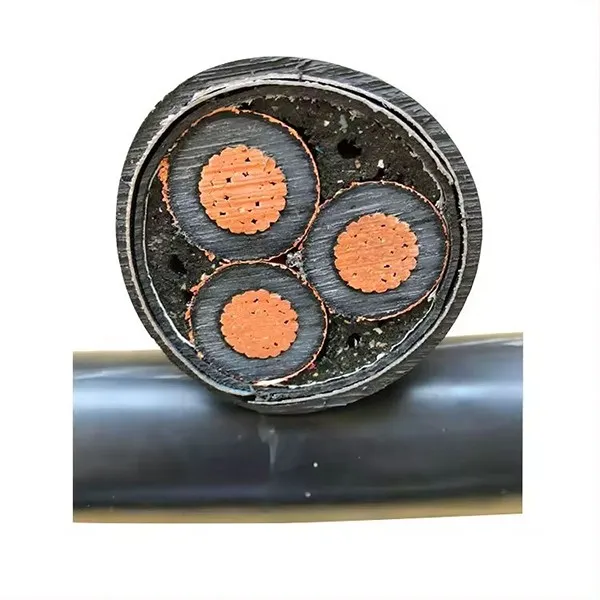
Let's take a look at some examples to get a better idea of how the weight can vary.
Example 1: Single - Core Copper Conductor PVC Insulated Cable
Let's say we have a single - core cable with a 1 - mm² copper conductor and a PVC insulation. The copper conductor weighs about 8.9 grams per meter. The PVC insulation adds some weight, let's say about 2 grams per meter. So the total weight per meter of this cable would be around 10.9 grams.
Example 2: 3 - Core Aluminum Conductor XLPE Insulated Cable
Now, consider a 3 - core cable with a 2.5 - mm² aluminum conductor and XLPE insulation. Each 2.5 - mm² aluminum conductor weighs about 2.7 grams per square millimeter per meter, so for a 2.5 - mm² conductor, it's about 6.75 grams per meter. Since there are 3 cores, the total conductor weight is about 20.25 grams per meter. The XLPE insulation is relatively light, let's say it adds about 3 grams per meter. So the total weight per meter of this cable is around 23.25 grams.
As you can see, the weight can vary significantly depending on the cable's specifications.
We also offer other types of cables that you might be interested in. For example, our Multi Core Copper Conductor PVC Insulated Nonarmored Cable is a great option for many applications. It has multiple cores, which is useful for carrying multiple electrical circuits, and the PVC insulation provides good protection.
Another option is our Aluminium PVC Insulated PVC Sheath Armoured Cable. The aluminum conductor keeps the weight down, while the PVC insulation and sheath provide protection. The armoring adds extra mechanical protection, making it suitable for more demanding environments.
If you're in the market for flame - retardant flexible core cables or any of our other cable products, we'd love to hear from you. Whether you're a contractor, an engineer, or a DIY enthusiast, we can help you find the right cable for your needs. We can provide you with detailed information about the weight per unit length of our cables, as well as other important specifications like current - carrying capacity, voltage rating, and temperature rating.
Contact us to start a discussion about your cable requirements. We'll work with you to find the best solution for your project and make sure you get the highest - quality cables at a competitive price.
References
- Electrical Wiring Handbook, various editions
- Cable Manufacturer Product Catalogs


